
Choosing the right eyeglasses involves more than finding a frame that looks good. If you need help seeing clearly at different distances, understanding your lens options can make it easier to choose eyewear that suits your everyday activities. Two common options are progressive lenses and bifocal lenses. When comparing progressive lenses vs. bifocals, the main difference is how each lens provides different levels of vision correction. Progressive lenses offer a gradual transition between distance, intermediate, and near vision, while bifocals have two distinct prescription zones.
Both options can help people who need multifocal vision correction. However, your prescription, lifestyle, comfort preferences, and budget can influence which option is more suitable. In this guide, we’ll explain how progressive and bifocal lenses work, compare their benefits and drawbacks, and explore what to consider before making a decision.
What Are Progressive Lenses?
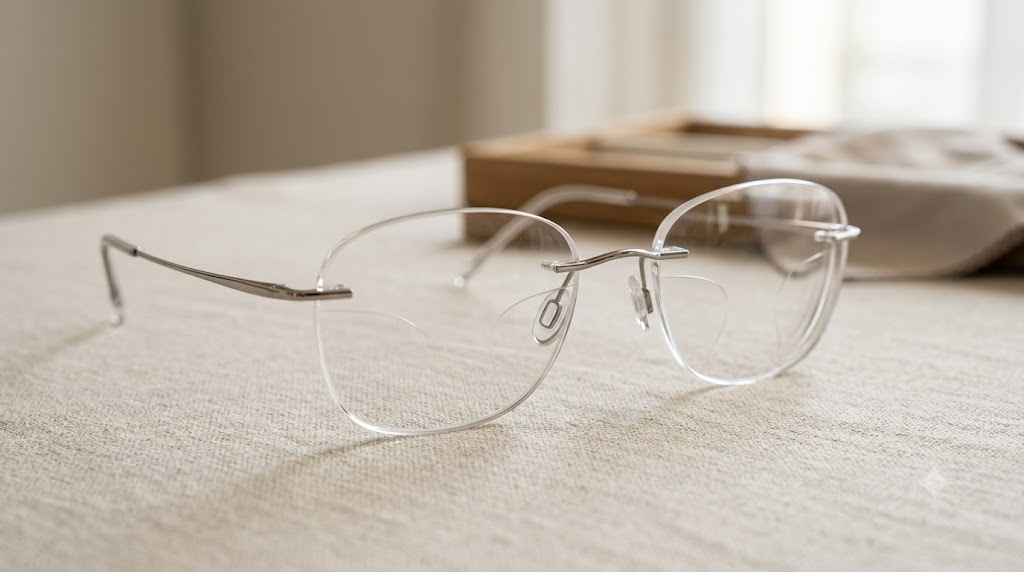
Progressive lenses are multifocal eyeglass lenses designed to provide distance, intermediate, and near vision correction in a single lens. They are commonly prescribed for people who need help seeing clearly at different distances, including those experiencing presbyopia, an age-related change in the ability to focus on nearby objects. Unlike traditional bifocals, progressive lenses do not have a visible line separating the different prescription areas.
How Do Progressive Lenses Work?
Progressive lenses gradually change in prescription power from the upper portion of the lens to the lower portion. Typically, the upper area supports distance vision, the middle area provides intermediate vision, and the lower area supports near tasks such as reading. This gradual progression allows you to move between different viewing distances without switching glasses. However, the usable viewing areas depend on the lens design, prescription, and frame measurements.
Benefits of Progressive Lenses
Progressive lenses offer several potential advantages:
- Multiple viewing distances: One pair of glasses can support distance, intermediate, and near vision.
- No visible dividing line: The lenses have a seamless appearance.
- Everyday convenience: They may suit people who regularly switch between reading, computer work, conversations, and distance viewing.
- Different lifestyle needs: They can be designed to accommodate various visual requirements, depending on the available lens options.
Potential Drawbacks of Progressive Lenses
Despite their benefits, progressive lenses may not be ideal for everyone.
- Adjustment period: Some people need time to become comfortable using the different viewing areas.
- Peripheral distortion: Certain progressive lens designs can produce distortion toward the sides of the lenses.
- Precise fitting requirements: Accurate measurements and appropriate frame positioning are important for lens performance.
- Cost considerations: Progressive lenses often cost more than basic bifocal lenses, depending on the design and materials.
What Are Bifocal Lenses?
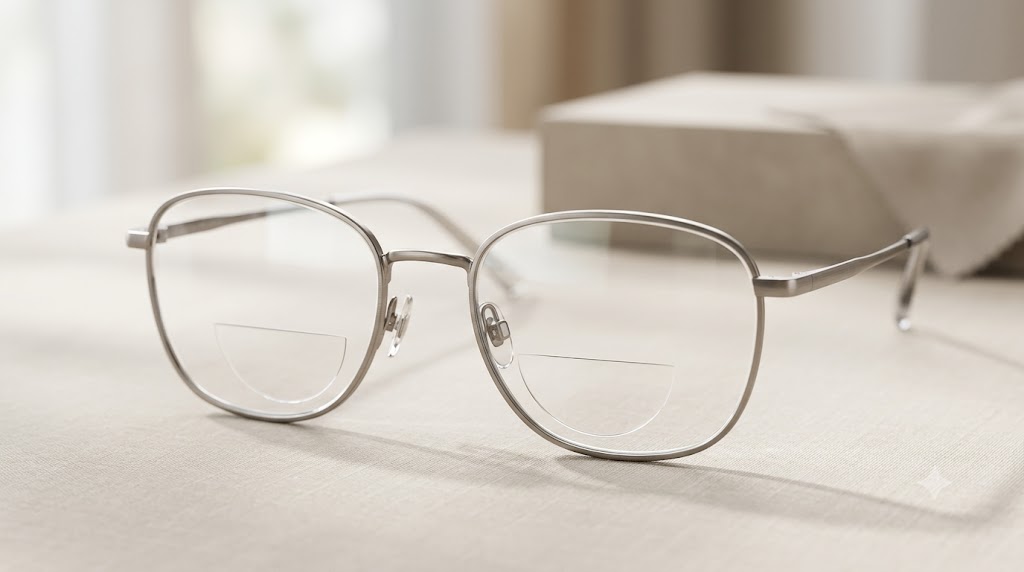
Bifocal lenses provide two distinct prescription powers in one lens. They are commonly used by people who need distance correction and additional help with near vision. A traditional bifocal lens typically has a main area for distance vision and a smaller segment for close-up tasks, such as reading. A visible line usually separates these two areas.
How Do Bifocal Lenses Work?
The upper portion of a traditional bifocal lens is generally used for distance vision, while the lower segment provides additional magnification for near vision. When reading, you can look through the lower segment. For distance viewing, you use the main portion of the lens. Because the two prescription areas are distinct, the change between them is more noticeable than the gradual transition found in progressive lenses. Standard bifocals do not include a dedicated intermediate-vision zone, which may be an important consideration for people who spend significant time working at a computer.
Benefits of Bifocal Lenses
Bifocal lenses offer several advantages:
- Two prescription powers: They support distance and near vision in one pair of glasses.
- Clearly defined reading area: The near-vision segment provides a distinct area for close-up tasks.
- Familiar design: Bifocals have a long history of use and are available in different segment styles.
- Potentially lower cost: Basic bifocals may be more affordable than some progressive lens options.
Potential Drawbacks of Bifocal Lenses
There are also a few limitations to consider.
- Visible dividing line: The lens segment is usually noticeable.
- Limited intermediate vision: Standard bifocals lack a dedicated intermediate zone.
- Noticeable prescription transition: Moving between the two areas can take some adjustment.
- Different appearance: Some people prefer the seamless look of progressive lenses.
Progressive Lenses vs. Bifocals: Key Differences
Understanding the differences between progressive and bifocal lenses can help you identify which features matter most for your vision needs.
| Feature | Progressive Lenses | Bifocal Lenses |
| Prescription zones | Gradual progression across multiple distances | Two distinct prescription zones |
| Visible dividing line | No visible segment line | Usually has a visible line |
| Distance vision | Supported | Supported |
| Intermediate vision | Dedicated intermediate area in the design | No dedicated intermediate zone in standard bifocals |
| Near vision | Supported | Supported |
| Adjustment | May require adapting to different viewing areas | May require adapting to the segment transition |
| Appearance | Seamless design | Visible segment line |
| Cost | Often more expensive than basic bifocals | Basic options may cost less |
The right choice depends on how you use your glasses throughout the day. Someone who frequently moves between a computer screen and distant objects may appreciate the intermediate area of progressive lenses. Someone who mainly needs distance and reading correction may find bifocals suitable.
Your prescription and fitting requirements should also be considered before making a final decision.
Progressive Lenses vs. Bifocals: Pros and Cons
Both lens types have benefits, but their differences may affect how comfortable and practical they feel in everyday life.
Progressive Lenses: Pros and Cons
Pros
- Provide correction for distance, intermediate, and near vision.
- Have no visible dividing line.
- Can accommodate a range of everyday activities.
- Allow you to use one pair of glasses for multiple viewing distances.
Cons
- May require an adjustment period.
- Can produce peripheral distortion.
- Require accurate measurements and suitable frame fitting.
- May cost more than basic bifocal lenses.
Progressive lenses may be worth considering if you prefer a seamless lens design and frequently switch between different viewing distances.
Bifocal Lenses: Pros and Cons
Pros
- Provide two prescription powers in one lens.
- Have a clearly defined near-vision segment.
- May be a practical option for distance and reading needs.
- Basic designs may be less expensive than progressive alternatives.
Cons
- Usually have a visible dividing line.
- Do not provide a dedicated intermediate zone in standard designs.
- May involve a noticeable transition between prescription areas.
- May not suit every person’s visual requirements.
Bifocals may be worth discussing with your eye-care professional if you primarily need distance and near correction and prefer clearly separated viewing areas.
Which Is Better for Your Lifestyle?
When deciding between progressive lenses and bifocals, consider the activities you perform most frequently rather than choosing based on appearance alone.
Reading and Close-Up Tasks
Both progressive and bifocal lenses can support near vision when prescribed and fitted appropriately. If you frequently read books, examine documents, or perform detailed close-up tasks, consider how each lens provides access to its near-vision area. Your reading habits, preferred working distance, and prescription can influence the choice.
Computer Work
Computer use often involves an intermediate viewing distance. Standard bifocals do not have a dedicated intermediate-vision zone, which can make them less convenient for some computer users. Progressive lenses include an intermediate area, although its size and usability depend on the lens design. For people who spend extended periods at a computer, occupational or computer-specific lenses may also be worth discussing with an eye-care professional.
Driving and Distance Vision
Clear distance vision is essential when driving. Both progressive and bifocal lenses can provide distance correction, but the most appropriate option depends on your prescription, lens design, and visual needs. If you choose progressive lenses, ask about adapting to their different viewing areas and any peripheral distortion that may affect your comfort. Always follow your eye-care professional’s advice about whether your eyewear is suitable for driving.
Everyday Activities
Think about how often you move between looking at nearby objects, computer screens, people across a room, and distant objects. Progressive lenses may offer convenience for people who frequently change viewing distances. Bifocals may be suitable for people whose primary needs involve two distinct distances. Neither option is automatically better for everyone. Your daily routine and individual prescription should guide the decision.
How Long Does It Take to Adjust to Progressive Lenses or Bifocals?
The adjustment period varies from person to person. Some people become comfortable with new multifocal lenses relatively quickly, while others need more time to learn how to use the different viewing areas. Progressive lens wearers may need to adjust their head and eye movements to find the clearest area for a particular task. Bifocal wearers may need to become accustomed to looking through the appropriate segment for distance or near vision. Follow the wearing and fitting instructions provided by your eye-care professional. If you experience persistent discomfort, dizziness, or difficulty seeing clearly, contact your optician or eye-care professional to check the prescription and fit. Do not assume that ongoing problems are simply part of the adjustment process.
Are Progressive Lenses More Expensive Than Bifocals?
Progressive lenses often cost more than basic bifocals, but the final price depends on several factors.
These may include:
- Lens design: Different multifocal designs have different features and manufacturing requirements.
- Prescription complexity: Your individual prescription can affect the lenses available to you.
- Lens materials: Material choice can influence weight, thickness, and price.
- Coatings and additional features: Optional treatments can change the overall cost.
- Frame compatibility: The frame must accommodate the selected lens design and measurements.
When comparing prices, ask what is included in the quoted cost. Consider the lens features, fitting, and suitability for your needs rather than comparing prices alone. The most expensive option is not necessarily the best choice for every person. Discuss your priorities and budget with your eyewear provider.
How to Choose Between Progressive Lenses and Bifocals
Before selecting a lens type, consider the following factors.
1. Identify your vision needs. Determine whether you need correction for distance, intermediate, and near vision or primarily for distance and reading.
2. Consider your daily activities. Think about computer work, reading, driving, hobbies, and other tasks you perform regularly.
3. Decide which lens design you prefer. Some people prefer the seamless appearance of progressive lenses, while others are comfortable with the visible line of bifocals.
4. Evaluate comfort and adaptation. Ask about the adjustment period and what to expect from your selected lens design.
5. Compare available options and costs. Consider the prescription, frame compatibility, lens materials, and features included in each option.
6. Consult an eye-care professional. Your prescription, visual requirements, and fitting measurements can help determine which lens design is appropriate.
If you are also choosing new frames, Eye’ll Be There offers at-home eyewear services that bring a curated selection of frames, prescription lens options, and personalized guidance to customers across Virginia, Maryland, and Washington, D.C.
Try Different Eyeglass Frames Before Making Your Decision
Choosing multifocal lenses involves more than deciding between progressive and bifocal designs. Frame fit and positioning are also important because the lenses must be measured and fitted appropriately for their intended use. Trying different frames can help you compare their appearance, comfort, and fit before making your selection. Consider whether the frame sits comfortably on your nose, feels secure around your ears, and is suitable for your prescription and chosen lens design. Eye’ll Be There brings eyewear options and personalized assistance directly to customers, making it possible to explore frames in a familiar environment.
Learn more about the service in your area:
- Try Eyeglasses at Home in Virginia
- Try Eyeglasses at Home in Maryland
- Try Eyeglasses at Home in Washington, D.C.
You can compare frame styles, consider comfort, and discuss available prescription lens options with personalized guidance. Your eye-care professional can help ensure the selected lenses meet your visual requirements.
Frequently Asked Questions
Are progressive lenses better than bifocals?
Neither lens type is universally better. Progressive lenses offer a gradual transition between distance, intermediate, and near vision, while standard bifocals provide two distinct prescription areas. Your prescription, lifestyle, comfort preferences, and budget all influence which option may be more suitable.
What Is the Main Difference Between Progressive Lenses and Bifocals?
The main difference is how the prescription changes across the lens. Progressive lenses provide a gradual progression between different viewing distances without a visible dividing line. Bifocals have two distinct prescription zones, typically for distance and near vision, separated by a visible line.
Are Progressive Lenses Harder to Get Used To?
Some people need time to adjust to progressive lenses because they must learn to use the different viewing areas. Adaptation varies depending on the individual, prescription, lens design, and fitting. If visual difficulties persist, contact your optician or eye-care professional.
Can You Drive With Bifocal or Progressive Lenses?
Both lens types can provide distance correction for driving when appropriately prescribed. However, suitability depends on your prescription, lens design, and individual vision. Follow your eye-care professional’s guidance and ensure you can see clearly and comfortably before driving.
Do Progressive Lenses Cost More Than Bifocals?
Progressive lenses often cost more than basic bifocals because of their design and manufacturing requirements. However, prices vary according to prescription, materials, coatings, and other features. Compare the total cost and included services before making your decision.
Can I Switch From Bifocals to Progressive Lenses?
Many people can switch from bifocals to progressive lenses, provided the new lenses suit their prescription and visual needs. Accurate measurements and appropriate fitting are important. Discuss the change with your eye-care professional to understand the available options and potential adjustment period.
Conclusion: Choose the Lenses That Fit Your Needs
When comparing progressive lenses vs. bifocals, the best choice depends on your prescription, everyday activities, comfort preferences, and budget. Progressive lenses provide a gradual transition between distance, intermediate, and near vision, making them an option for people who frequently switch between viewing distances. Bifocals offer two distinct prescription zones and may suit people whose primary needs involve distance and near vision. Take time to compare the available options, discuss your needs with an eye-care professional, and select frames that support the proper fit of your lenses.
If you are looking for a more convenient way to explore eyewear, visit Eye’ll Be There to learn about its at-home eyewear service and personalized frame-selection experience. Choosing the right glasses starts with understanding your vision needs and finding an option that works for your everyday life.