
Choosing the right eyewear involves more than selecting a frame that looks good. Different lens technologies offer specific benefits, and understanding these differences can help you choose glasses that suit your lifestyle. Photochromic lenses adjust their tint in response to suitable light conditions, while polarized lenses reduce reflected glare. Both options can be available in prescription eyewear, making them relevant choices for people who need corrective lenses. Eye’ll Be There helps customers in Virginia, Maryland, and Washington, D.C., explore eyewear frames through convenient at-home assistance.
What Are Photochromic Lenses?
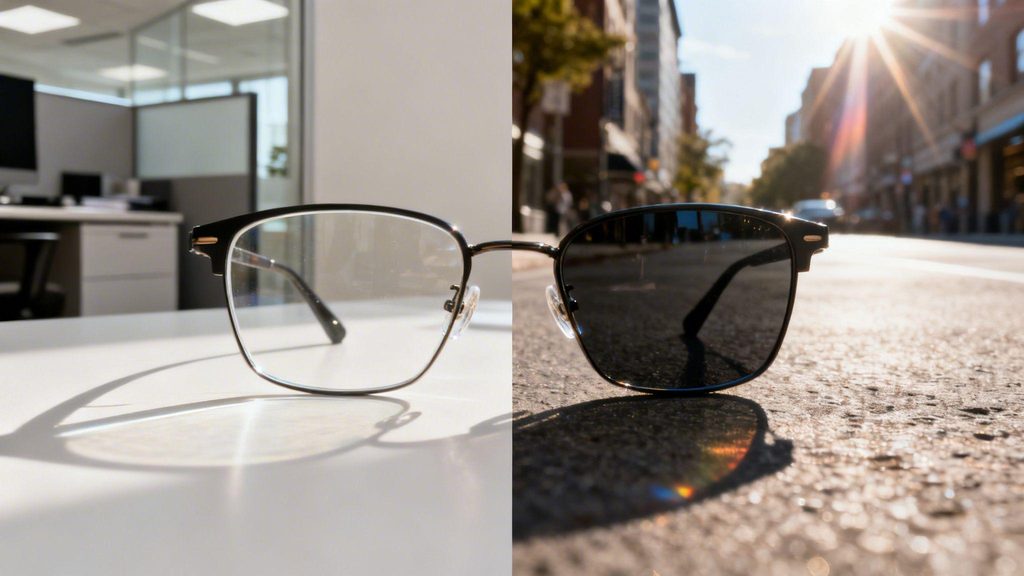
Photochromic lenses are designed to change their tint in response to ultraviolet radiation and other environmental conditions, depending on the lens technology. They generally become darker outdoors and clearer indoors, reducing the need to switch between regular glasses and separate sunglasses. These lenses are available in different prescription options, making them a practical consideration for people who want adaptable eyewear throughout the day.
How Photochromic Lenses Work
Photochromic lenses contain light-sensitive compounds that change their optical properties when exposed to suitable ultraviolet radiation. This reaction causes the lenses to darken outdoors and return toward a clearer state when the activating exposure decreases. The speed and degree of tint change can depend on temperature, UV exposure, and the specific lens technology. Conventional photochromic lenses may not darken as much inside a vehicle because many windshields block much of the UV radiation that activates them.
Benefits of Photochromic Lenses
One of the main advantages of photochromic lenses is convenience, especially for people who regularly move between indoor and outdoor environments. Rather than frequently changing between prescription glasses and sunglasses, wearers can use one pair for many everyday situations. Many photochromic products also provide UV protection, although the exact protection should always be confirmed in the product specifications. They can be a useful option for people seeking practical prescription eyewear for commuting, walking, shopping, and other daily activities.
Limitations of Photochromic Lenses
Although photochromic lenses are convenient, their tint does not respond identically in every environment. Some lenses may darken less in hot weather, and conventional versions may remain relatively clear behind a windshield. The time required to darken or return to a clearer state also varies by product. People who regularly drive in bright sunlight or spend extended periods near reflective surfaces may want to consider whether photochromic lenses alone meet their needs.
What Are Polarized Lenses?
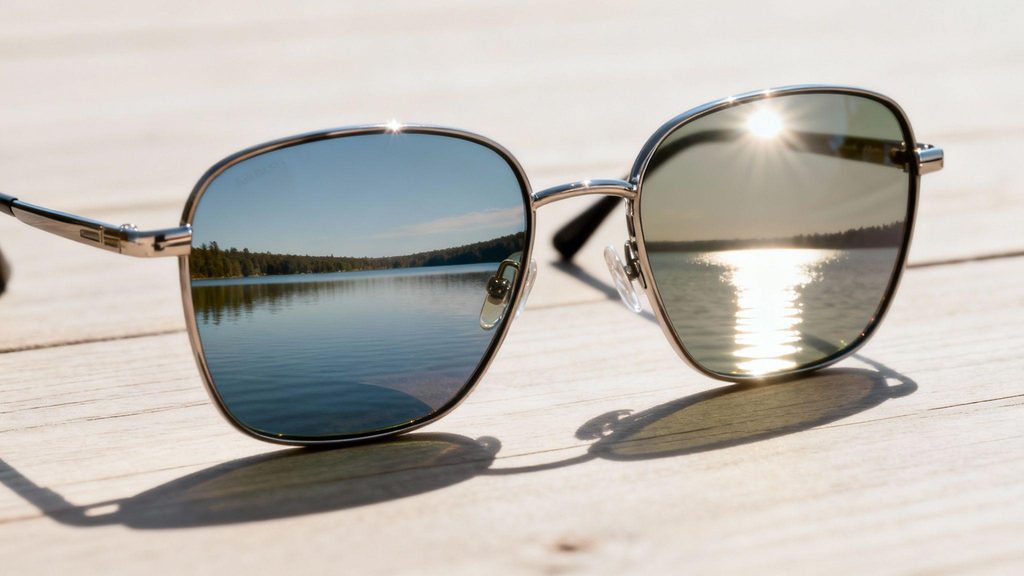
Polarized lenses are designed to reduce reflected glare from surfaces such as roads, water, and snow. This glare can make outdoor activities uncomfortable by creating bright reflections that interfere with clear vision. Polarized sunglasses use a specialized filter to block much of this reflected light, making them particularly useful for people who spend time outdoors. However, polarization is a separate feature from lens tint and does not automatically guarantee UV protection.
How Polarized Lenses Reduce Glare
When sunlight reflects from relatively flat surfaces, some of the reflected light becomes horizontally polarized, producing distracting glare. Polarized lenses contain a filter that blocks much of this light before it reaches the eyes. This can improve visual comfort around water, on bright roads, and in other high-glare environments. The effect is different from simply darkening a lens, because polarization specifically targets reflected light rather than changing tint in response to sunlight.
Benefits of Polarized Lenses
Polarized lenses can make bright outdoor environments more comfortable by reducing reflections that interfere with vision. They are often useful for driving in sunny conditions, fishing, boating, and spending time around water or snow. By reducing glare, they may help wearers see surrounding details more comfortably. Prescription polarized sunglasses are also available, allowing people who need vision correction to benefit from this technology while using their prescribed eyewear.
Limitations of Polarized Lenses
Polarized lenses do not automatically become lighter indoors, so they are generally intended for situations where glare reduction is useful. They can also make some LCD screens, including certain vehicle displays and digital devices, harder to view at particular angles. Additionally, polarization alone does not confirm that sunglasses provide adequate ultraviolet protection. When selecting polarized eyewear, check that the product also offers appropriate UV protection for your needs.
How Do Photochromic and Polarized Lenses Differ?
Photochromic and polarized lenses offer different benefits depending on your eyewear needs and daily activities. Photochromic lenses adjust their tint in response to suitable light conditions, while polarized lenses reduce glare from reflective surfaces such as roads and water. Understanding these differences can help you choose the right specialty lenses for driving, outdoor activities, and everyday vision correction.
| Feature | Photochromic Lenses | Polarized Lenses |
| Main purpose | Adjust tint as lighting conditions change | Reduce reflected glare |
| How they work | Respond to suitable UV exposure and environmental conditions | Filter much of the horizontally polarized reflected light |
| Indoor use | Usually become clearer indoors | Remain polarized; tint depends on the lens design |
| Outdoor use | Darken under suitable conditions | Reduce glare from reflective surfaces |
| Driving | Conventional versions may not darken fully behind windshields | Reduce glare but may affect visibility of some digital displays |
| UV protection | Many provide UV protection; check specifications | Polarization alone does not guarantee UV protection |
| Best suited for | People moving between indoor and outdoor environments | People frequently exposed to outdoor glare |
| Prescription availability | Available in prescription eyewear | Available in prescription sunglasses |
| Combined features | Available in selected products | Can be combined with photochromic technology in selected products |
Difference in Lens Function
The main difference is the way each technology responds to light. Photochromic lenses adjust their tint as environmental conditions change, while polarized lenses use a filter to reduce reflected glare. A darker lens is not necessarily polarized, and a polarized lens does not automatically change its tint outdoors. Understanding this distinction helps you choose eyewear based on the specific conditions in which you need the most visual comfort.
Difference for Driving and Outdoor Activities
Both lens types may be useful outdoors, but their benefits vary with the situation. Photochromic lenses can offer convenience when moving between indoor and outdoor settings, while polarized lenses can reduce distracting reflections from roads and other surfaces. For driving, conventional photochromic lenses may not darken sufficiently behind a windshield, and polarization can affect the visibility of some vehicle displays. Your driving habits and preferred lens features should guide your selection.
Can Lenses Be Both Photochromic and Polarized?
Yes, selected specialty products combine photochromic and polarized technologies, although availability depends on the manufacturer and lens design. These products can offer tint adjustment and glare reduction in one pair of glasses. Not every photochromic lens is polarized, however, and not every polarized lens changes tint. Check the specifications carefully to confirm which features are included before ordering prescription eyewear.
Which Is Better: Photochromic or Polarized Lenses?
Neither option is automatically the best choice for every wearer because the technologies address different needs. Your preferred lens type depends on how often you move between indoor and outdoor environments, how much reflected glare you experience, and whether you need prescription correction. Considering your routine and eyewear preferences can help you identify the most suitable option.
When Photochromic Lenses May Be the Better Choice
Photochromic lenses may suit people who regularly move between home, work, and outdoor environments and prefer not to carry separate sunglasses. Their changing tint provides convenience for many everyday activities, particularly when lighting conditions vary throughout the day. They can also be incorporated into prescription glasses, subject to product availability and prescription requirements. However, people who need strong glare reduction should consider whether an additional polarized option would be more appropriate.
When Polarized Lenses May Be the Better Choice
Polarized lenses may be more suitable for people who spend considerable time outdoors in bright, reflective environments. They can reduce glare from roads, lakes, and other surfaces, making activities such as fishing, boating, and sunny-day driving more comfortable. Prescription polarized sunglasses allow wearers to combine vision correction with glare reduction. It remains important to check UV protection and consider whether polarized lenses are suitable for viewing the screens used in your daily routine.
Which Lenses Are Better for Everyday Use?
The better choice depends on where and how you use your glasses. Someone who moves frequently between indoor and outdoor spaces may value the convenience of photochromic lenses, while someone who spends long periods near water or in bright sunlight may prefer polarized sunglasses. Some people may benefit from owning separate pairs for different situations. Your prescription, daily activities, and comfort preferences should guide the final decision.
How to Choose the Right Specialty Lenses
Selecting specialty eyewear involves considering more than tint or glare reduction alone. Your prescription, outdoor exposure, everyday activities, and comfort requirements all play a role in choosing suitable corrective lenses. It is also important to distinguish UV protection from photochromic and polarized features, since these technologies provide different benefits.
Consider Your Daily Activities
Think about where you spend most of your time and the conditions in which glare or changing light affects you. Commuters may prefer lenses that adapt to changing environments, while outdoor enthusiasts may benefit more from glare reduction. People with specific prescription requirements should also confirm that their chosen lens technology is available for their prescription. Matching the lens features to your routine can help you make a more practical eyewear decision.
Check UV Protection and Lens Features
UV protection, photochromic tinting, and polarization are separate lens features that may be combined in certain products. A dark tint alone does not confirm adequate UV protection, and polarization does not automatically provide it. Before purchasing specialty eyewear, review the manufacturer’s specifications and confirm which features the lenses include. This is particularly important when selecting sunglasses for prolonged outdoor use.
Choose Frames That Suit Your Prescription
Frame fit affects both comfort and how prescription lenses sit in front of your eyes. The size, shape, and positioning of the frame should suit your face and the lens design you choose. Accurate measurements are especially important for certain prescription and progressive lens options. A suitable frame can help you feel comfortable wearing your glasses throughout the day while accommodating the lens features you need.
Choose Eyewear With Eye’ll Be There
Choosing frames can be easier when you can compare styles in a familiar environment. Eye’ll Be There brings selected eyewear frames and personalized fit and style guidance to customers in Virginia, Maryland, and Washington, D.C. This at-home service allows you to consider how frames look and feel without making a separate trip to an optical store. Specialty lens availability and prescription requirements should be confirmed before your eyewear order is finalized.
Compare Eyeglass Frames in Your Own Environment
Trying frames at home gives you time to compare different styles in familiar lighting and alongside your everyday clothing. You can consider frame shape, comfort, and appearance without feeling rushed. This can be particularly helpful when selecting frames for prescription sunglasses or everyday glasses. Although frame selection can take place at home, the appropriate prescription and lens specifications still need to be confirmed.
Get Help Selecting Your Next Pair of Glasses
Eye’ll Be There makes eyewear selection more convenient by bringing personalized frame guidance directly to your home. Whether you are considering photochromic glasses, polarized prescription sunglasses, or everyday corrective lenses, the service can help you compare frame styles and fit. To discuss available options and service coverage, visit the Eye’ll Be There at-home eyewear service page and ask about arranging an appointment.
Frequently Asked Questions About Photochromic and Polarized Lenses
Choosing between specialty lenses often raises questions about how they work, whether they suit prescription glasses, and which features are useful for everyday activities. The answers below cover important differences to consider before selecting your next pair of eyewear.
Are Photochromic Lenses the Same as Polarized Lenses?
No. Photochromic lenses change tint in response to suitable light exposure, while polarized lenses reduce reflected glare. They perform different functions, although some products combine both technologies.
Are Polarized Lenses Better for Driving?
Polarized lenses can reduce glare from roads and reflective surfaces, which may improve visual comfort in bright conditions. However, they can affect the visibility of certain digital displays, so suitability depends on your driving environment and needs.
Do Photochromic Lenses Block UV Rays?
Many photochromic lenses provide UV protection, but the level depends on the specific product. Check the manufacturer’s specifications rather than assuming every photochromic lens provides identical protection.
Can You Get Photochromic or Polarized Prescription Glasses?
Yes. Both technologies are available in selected prescription eyewear products. Availability depends on the lens design, prescription, and manufacturer.
Which Lens Type Is Best for Everyday Wear?
Photochromic lenses may be convenient for changing light conditions, while polarized lenses are useful for reducing outdoor glare. Your routine and visual requirements should guide your choice.
Choose Specialty Lenses That Suit Your Lifestyle
Understanding the difference between photochromic and polarized lenses can help you choose eyewear that better fits your everyday needs. Photochromic lenses offer changing tint, while polarized lenses target reflected glare, and selected products combine both features. Eye’ll Be There helps customers in Virginia, Maryland, and Washington, D.C., compare eyewear frames through personalized at-home assistance. Visit the at-home eyewear service page to discuss your frame preferences and available options.