
Figuring out your face shape is the easiest way to stop guessing and start choosing glasses that actually suit you. If you’re wondering how to identify your face shape for glasses at home, you don’t need any special tools — just a mirror, a simple method, and a few minutes.
What is the easiest way to identify your face shape for glasses at home?
The easiest way is to pull your hair back, look in a mirror or take a straight-on photo, trace your face outline, and compare your proportions to common face shapes like round, oval, square, heart, or diamond.
This guide will show you step by step how to find your face shape for glasses at home, plus how to choose frames that actually look good in real life — not just online.
Why face shape matters when choosing glasses
Your face shape directly affects how glasses look and feel on you. The right frames can:
- Balance your facial features
- Improve proportions
- Enhance your overall appearance
For example, angular frames can add structure to softer faces, while rounded frames can soften strong jawlines. Choosing the wrong shape can make glasses feel off — even if they look good online.
If you want to avoid trial and error, you can also try glasses frames at home and see what actually suits you in your own lighting and environment.
What you’ll need to identify your face shape at home
To identify your face shape for glasses at home, you only need:
- A mirror or a straight-on photo
- Natural lighting
- Hair pulled back
- A phone or pen to trace your outline
- (Optional) A ruler to compare face width and length
Avoid angled selfies or poor lighting — they can distort your actual face proportions.
Step-by-step: how to identify your face shape for glasses at home
Step 1 — Look straight into a mirror or take a front-facing photo
Keep your head level and your expression neutral. This gives you the most accurate view of your natural face shape.
Step 2 — Find the widest part of your face
Check whether your forehead, cheekbones, or jawline is the widest. This is one of the strongest indicators of your face shape.
Step 3 — Check your jawline shape
- Rounded jaw → softer shapes like round or oval
- Sharp/angular jaw → square or rectangular shapes
Step 4 — Compare face length vs width
- Longer than wide → long/rectangular
- Balanced → oval or round
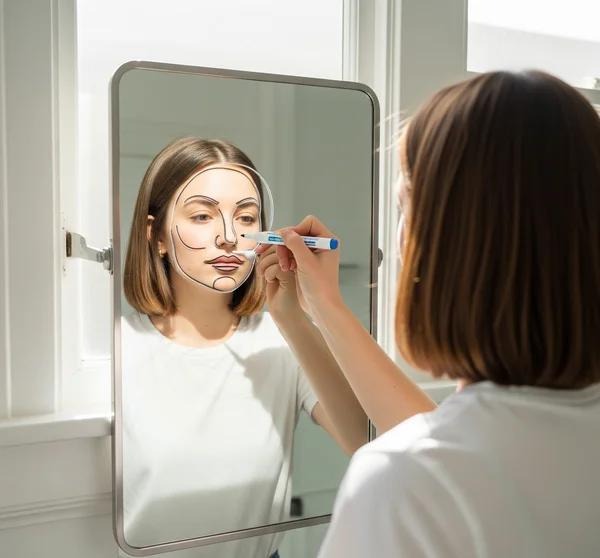
Step 5 — Trace your face outline
Use a mirror or your phone to trace your face shape. This makes it much easier to visually identify your shape.
Step 6 — Match your face to common face shapes
Compare your outline with standard face shapes explained below.
Common face shapes for glasses (and how to identify yours)
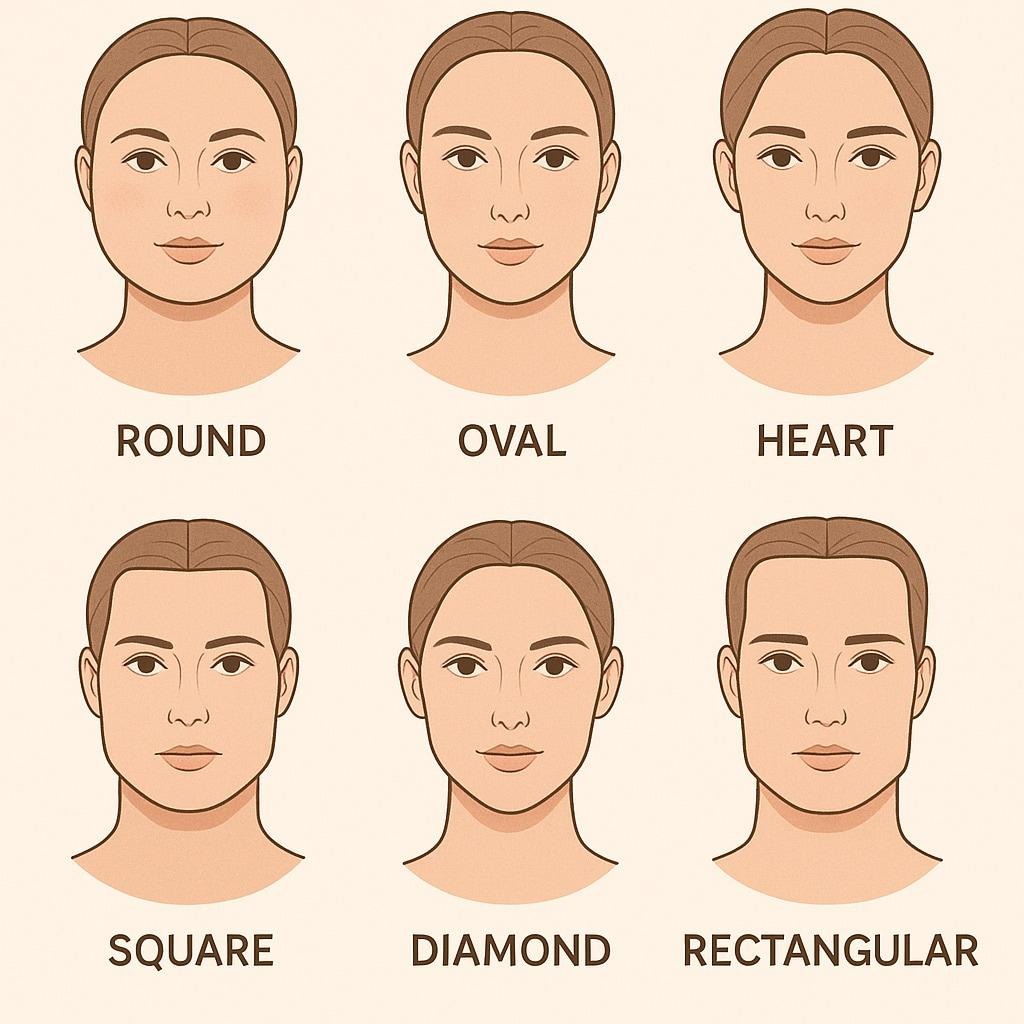
Round face
- Equal width and length
- Soft curves
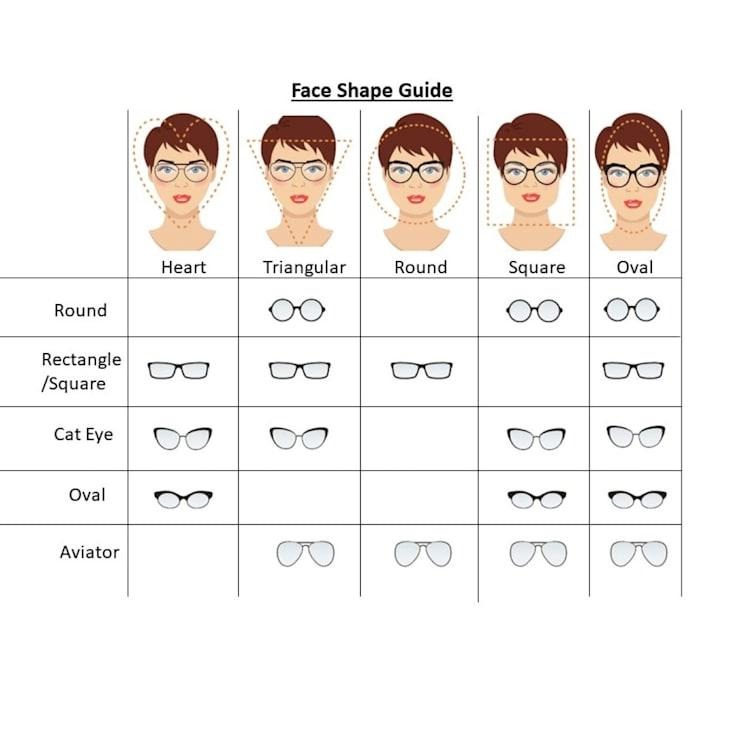
👉 Best frames: rectangular or angular styles
Square face
- Strong jawline
- Broad forehead
👉 Best frames: round or oval styles
Oval face
- Balanced proportions
👉 Best frames: most styles work
Heart-shaped face
- Wide forehead, narrow chin
👉 Best frames: light or bottom-heavy frames
Diamond face
- Narrow forehead and chin
- Wide cheekbones
👉 Best frames: rimless or oval
Long / rectangular face
- Face longer than wide
👉 Best frames: wider frames to add balance
(You can also read more about how frames work in real life in this guide:
how at-home eyewear services work)
Quick ways to find your face shape at home
If you want faster methods:
- Mirror method: trace your face outline directly
- Selfie method: draw over your photo
- String method: use a loop to compare proportions
Using two methods together gives the most accurate result.
How to choose glasses after identifying your face shape
Once you know your face shape, follow these simple rules:
- Create contrast
Round face → angular frames
Square face → rounded frames - Focus on proportion
Frames should match your face width - Check comfort
Fit matters as much as style - Consider color and thickness
Bold frames stand out, lighter frames blend naturally
Instead of guessing online, you can book an at-home eyewear appointment and try multiple styles in a comfortable setting.
Why trying glasses at home is better than guessing online
Online images don’t always show:
- True size and fit
- Real lighting
- Actual comfort
With Eye’ll Be There, you can try frames in your own environment and get a much better idea of what works for your face.
You can also compare this approach here:
glasses try at home vs in-store shopping
Common mistakes when identifying face shape
- Taking angled or distorted selfies
- Letting hair cover your face shape
- Ignoring proportions
- Choosing trendy frames without checking fit
Fix these by using a straight-on view and testing frames in natural light.
Visual guide you should follow
To make this easier, include:
- Face shape diagram
- Mirror tracing example
- Before/after glasses comparison
- Frame types by face shape
These visuals help you identify your face shape faster and choose better frames.
TL;DR: Find Your Face Shape in Minutes
- Pull your hair back
- Stand in front of a mirror or take a straight photo
- Look for the widest part of your face
- Check if your jaw is round or sharp
- Compare face length vs width
- Trace your face outline
- Match it to common face shapes
- Try frames at home to see what suits you
FAQ
How do I identify my face shape for glasses at home?
Pull your hair back, use a mirror or selfie, trace your face outline, and compare it with common face shapes like round, oval, or square.
Can I use my phone to find my face shape?
Yes, a straight-on selfie works well if taken in good lighting without distortion.
What if my face shape is not clear?
Many people have a mix of shapes. Focus on your widest area and jawline to decide.
Which glasses suit my face shape best?
It depends on your shape, but generally contrasting frame styles work best.
Is trying glasses at home better than buying online?
Yes, because you can see real fit, comfort, and appearance in natural lighting.
How do I choose the right frame size?
Look at face width, bridge fit, and temple comfort — or try frames at home for accuracy.